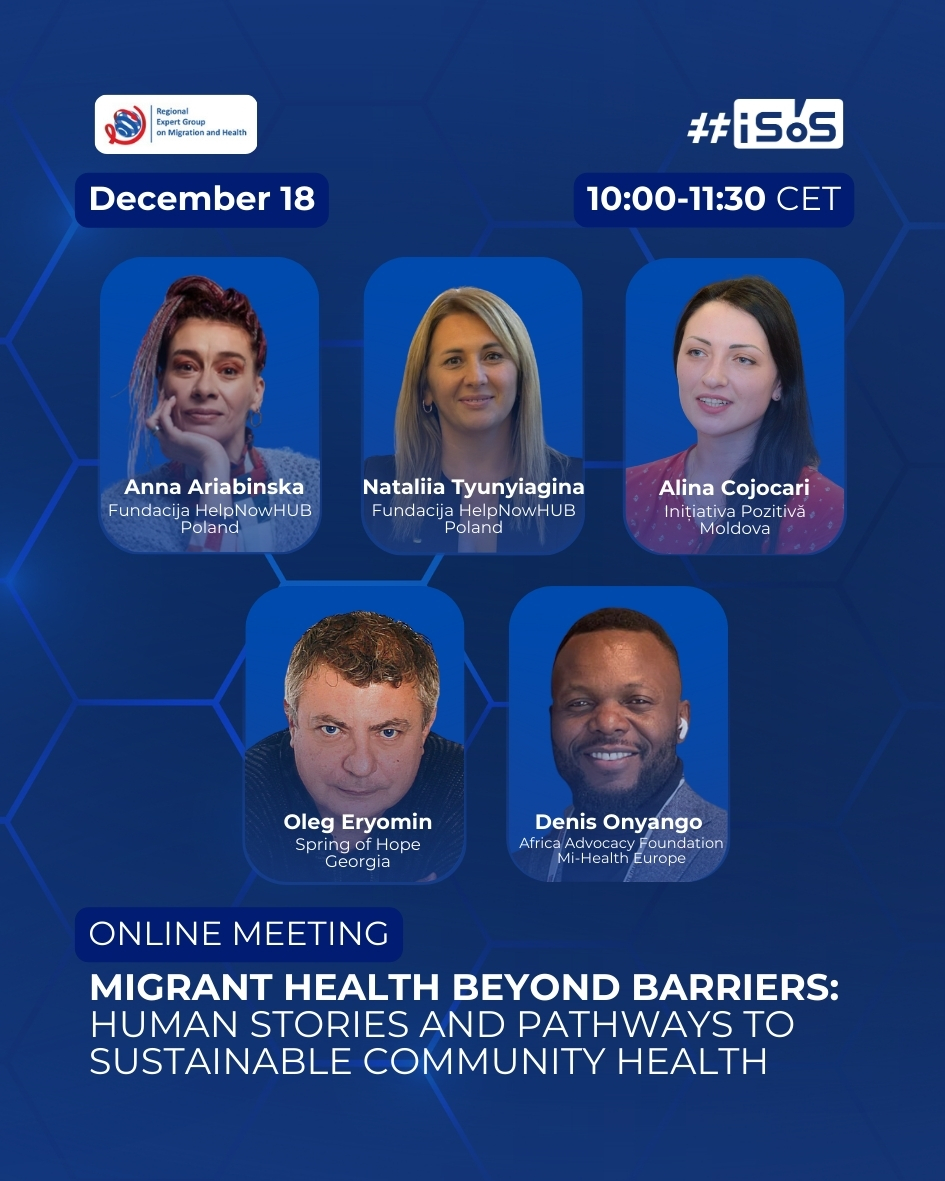
On December 18th, marking International Migrants Day, REG held a round table entitled “Migrant Health Beyond Barriers: Human Stories and Pathways to Sustainable Community Health” focusing on improving access to healthcare services for key populations among migrants in host countries.
The discussion was structured into two thematic sessions. The first, “Social Determinants of Health,” where experts from NGOs assisting refugees and migrants shared their experiences in addressing complex cases, highlighting both the pathways and the barriers migrants encounter when seeking treatment. Discussions centered on the complex structural barriers impeding the HIV care continuum, including legal status, stigma, discrimination, and restrictive health policies that disproportionately affect undocumented migrants.
The second session, “Sustainability of Community-Led Responses,” engaged participants in strategic dialogue on fortifying community-led and migrant-led organizations. The conversation emphasized the necessity of developing resilient, locally-funded models to ensure these essential entities can continue their role as critical implementers of people-centered services and as advocates for health equity.
The meeting brought together experts from non-profit organizations and migrant assistance programs, as well as representatives of international and donor organizations supporting initiatives in the areas of health and migration. Experts representing public organizations shared their experiences during a panel discussion:
- Alina Cojocari, Inițiativa Pozitivă, Moldova
- Anna Ariabinska and Nataliia Tyunyiagina, Fundacija HelpNowHUB, Poland
- Oleg Eryomin, Spring of Hope, Georgia
- Denis Onyango, Africa Advocacy Foundation, Mi-Health Europe, UK
Experts highlighted that migrants account for 59% of newly diagnosed HIV cases in the WHO European Region, with a significant proportion facing vulnerability due to undocumented status and fear of immigration enforcement. The main barriers were discussed, including legal and administrative restrictions, language and cultural differences, stigma and discrimination, and the lack of access to healthcare for undocumented migrants. Challenges faced by Ukrainian refugees were also discussed.
Participants sstrongly emphasized that, in the current context, NGOs and community-led organizations are often the only link between vulnerable migrant and refugee groups and healthcare systems in host countries, while NGOs are increasingly facing existential threats due to prevailing political climates. The sustainability of these organizations is crucial for engaging clients in prevention, testing, and treatment services, as well as maintaining adherence.